Sunday, May 10, 2015

Venezuela : Towards an Economy of Freedom by Jesus Rojas


This article expresses the personal views of Comrade Jesus Rojas


Toward an economy freedom

By Jesús Rojas

Apotheosic was the concentration of workers in Venezuela, this glorious May 1st, we celebrate not just the accomplishments and achievements of national and international working class, but the crushing defeat that we have given to US imperialism and the oligarchy in their attempt to annihilate our Bolivarian Revolution.

In just five months, our government has dismantled coups, assassination attempts, intentions of a direct military invasion; Not to mention that despite the difficulties we still have, we controlled the consequences of the economic war that for several months the corporate oligarchy and importer intensified to destabilize the government trying to leave the population without food commodities. But they could not. The great civic-military movement remains attentive and alert, defending the peace and sovereignty and guaranteeing food, goods and services for the people.

The writers and pundits of trades, paid from Miami by the counterrevotunionaries to orchestrate the brutal media and psychological war against the Bolivarian Venezuela and Chavista, claimed that " In April Maduro fails". And we started May with one of the largest popular demonstrations we've had in these two years of physical absence of our Lord Commander Hugo Chavez. Chavez returned to fill streets and avenues; mobilization was felt throughout the country showing that the vast majority of people are with Maduro, supporting the draft socialist construction. The working class has been put in charge of the economic offensive to start production optimization needed by the country. It is true, as told Comrade worker president, son of Chavez, we still need to prepare more, to strengthen again, overcome vices: selfishness, individualism, bureaucracy, the mere claim, inherited from the old fourth repubican union practice; but we are making great strides; the Venezuelan working class is reaching higher levels of organization and class consciousness.

Moreover, the Bolivarian and Chavista government maintains its course, as determined by the Plan of the Nation, to continue the goals and maintain the road to building socialism with its own characteristics.

We face great threats, internal and external. From the outside, the imperial ambition of doing of us a colony again to usurp our natural and energy resources, and take away the people's social, economic and political benefits that the Bolivarian Revolution has given, as part of the empowerment of people power.

The fair and equitable sharing of oil revenues, which has allowed the establishment of social Missions such as: Barrio Adentro, Sucre, Robinson, Amor Mayor, Gran Misión Vivienda Venezuela, among others that have brought enormous improvements in the quality of life of the entire population, it is still the unforgivable "sin" of the Revolution according to fascist oligarchy that wants to take back full control of the profits generated by the sale of our oil. That is one of the main internal threats we face today, because it is the oligarchy, the bourgeoisie, which aims to halt domestic production to sinking us into economic chaos.

Another no less dangerous threat is the existence of minority groups that pose as revolutionary forces and want to sow anarchy and division within the monolithic unity that is consolidating in politics and government management. Before these groups we have to be very vigilant and activate the popular intelligence and revolutionary vigilance, because they intend to capitalize any discontent that exists for some differences, faults, for things we still have to improve and resolve, to disunite, and try to prevent another perfect victory in parliamentary elections this year 2015. That would put at high risk the permanence of the Bolivarian Revolution in the coming decades; and therefore it is fundamental task of the fascists and the infiltrators.

But before these two major internal enemies, the fascist oligarchy and reformism, has increased awareness of the people around, even in sectors that do not share the ideological positions of the Revolution.

We identify the enemy, each day more clearly. We know who the big businessmen who seek to paralyze the economy; we know who the opportunists who want to deflect this project of national liberation to another government of social democracy. The people are becoming more aware day. What we seek is the overcoming of the capitalist rent and make of Venezuela powerful nation with a socialist model. We have to maintain a political freedom and accelerate the transition towards economic freedom.

We must move quickly to the great economic victory. Farm workers and city workers of the Bolivarian National Armed Forces. All the people together like a huge popular front led by the working class. We assume the challenge imposed on us by the current historical moment, and run ahead of the bourgeoisie and start to produce and jump-start the productive heart of the nation, or being responsible for the paralysis of the Bolivarian Revolution, we would be responsible for allowing the brake of the project of the true freedom and sovereignty for our people, example of struggle for other peoples.

Only the Venezuelan working class has in this juncture the strength and ability to be at the forefront of the counterattack that will take against the enemies of the fatherland`s economic powers. And we have to be very clear in that. We are going to the consolidation of the Bolivarian Socialism in the XXI century, as the only alternative to the savage capitalism, exclusive, genocidal and exploitative

SEE ALSO :

http://democracyandclasstruggle.blogspot.co.uk/2014/12/cuba-sanctions-failed-instruments-of-us.html

http://democracyandclasstruggle.blogspot.co.uk/2015/04/the-uss-deception-of-latin-america-by.html


http://democracyandclasstruggle.blogspot.co.uk/2015/03/venezuela-is-not-threat-to-any-country.html

India: Maharashtra ATS claim to have captured Comrade Ajith


Maharashtra ATS claims to have arrested senior Maoist leader

Ajith along with an aide identified by police as Ismail Hamaza Chiragpilli was arrested from a hospital.

 The Maharashtra Anti-Terrorism Squad (ATS) has claimed to have arrested senior Maoist leader Ajith (62) – who also goes by the names K Muralidharan and Thomas Joseph – from the outskirts of Pune city early on Monday morning. Ajith along with an aide identified by police as Ismail Hamaza Chiragpilli alias Pravin alias James Mathew (29) was arrested from a hospital in village Talegaon Dabhade – about 30 kms from Pune – and produced before a special judge on Tuesday morning. Additional Sessions Judge S V Mane has granted a seven-day police remand to question the two arrested accused. Police did not clarify how long the duo have been living in Talegaon. Police described Ajith as a close aide of top Maoist leader Ganapathy.

 They said that Ajith and Ismail were residing in Talegaon Dabhade under a false identity. The duo has been booked under Indian Penal Code (PIC 419, 467, 468, 471 and 34 read with UAPA sections 10, 13, 20, 38. “We have arrested them yesterday from Moraya Hospital in Talegaon Dabhade after getting a tip off from a source. They belong to the banned CPI (Maoist) party. We will be releasing a detailed note for the press later,” said Bhanupratap Barge, Senior Police Inspector, ATS (Pune Unit). A large contingent of police personnel was deployed at the Shivajinagar District and Sessions Court. The police did not allow the media persons to sit for the remand hearing citing ‘need of secrecy’ and security reasons. The two accused were produced in the court with their faced covered with a hood. When he was escorted out from the ATS office, Ajith told media persons, “I am a member of the CPI Maoist party. I shouldn’t have been arrested like this. My arrest is illegal.”
http://indianexpress.com/article/india/maharashtra/maharashtra-ats-claims-to-have-arrested-senior-maoist-leader/

Maoist leader Murali Kannambally held in Maharashtra

PUNE: Maoist leader Murali Kannambally has been held by the Maharashtra police. Murali, a native of Ernakulam, was arrested from Pune along with another Maoist identified as Ismail, brother of Moideen of Pandikkadu, the master brain behind the Maoist attacks in Kerala. The police are questioning the two in a secret place. Murali, accused in attacking the police station at Kayanna in Kozhikode in 1970 was absconding for the past 40 years. Murali, engaged in terrorist activities in north India, had published various books in Maoism. Murali, who was a student of Kozhikode Regional Engineering College, discontinued his studies and fled the state. As a student, he became a part of naxalism and later formed a naxal group named naxalbari. When a split was witnessed, he stood with K Venu. Later, when the Maoists merged again, he led the main leadership of naxalbari

India : Report on Hyderabad Dharna in Support of Professor G Saibaba by Harsh Thakor


Human Rights Organizations organized a massive protest against the detention of Prof. G. N. Saibaba demanding his unconditional release.

The Dharna was arranged at Indira Park yesterday. It was the first time that Muslim organizations also participated in protest program and raised their voice.

In all, 32 various organizations joined the protest and termed the detention of Prof. Sai Baba unconstitutional. Revolutionary writer, Mr. Varavara Rao, Ms. Ratnamala, Ms. Sandhiya, Maulana Naseeruddin, Ms. Rafath Seema, Mr. Ramulu (CPI), Mr. R. Narasimhaiah (CPM), Mr. B. Veerayah, Mr. Narayan Murthy, Mr. H.R.F. Jeevan Kumar, Mr. Lateef Mohammed Khan (Civil Liberties), Prof. Anwar Khan, Ms. Khaleeda Parveen, Maulana Hamid Husain Shuttari and other participated in dharna program.

Mr. Varavara Rao told that in the name of economic policies, imperialistic programs are being implemented. On violation of these policies, Governments are making an attempt to prove people anti-public. He bitterly criticized the Govt and said that if any person or organization does not support the Govt., it is treated as anti-national. Similar thing has happened in the case of Prof. Saibaba.

He was raising his voice against the atrocities of the government meted out to the down trodden and the Muslims. He was making an attempt to unite weaker sections and the Muslims but he was imprisoned. Despite the lapse of one year, his bail petition is not being considered. He lamented that Govt. is not hesitating to mislead the judiciary also. He termed Alair encounter an assassination and said that in the entire country, the policies of Israel are being implemented.

He further said that Viqaruddin and his companions were not convicted. They were facing the charges which were not proved yet. There were chances of their getting exonerated by the court. He questioned that who gives instructions to kill the people who are in judicial custody.

He told that the Governments who are playing in the hands of imperialist forces have started misleading the courts also. It is therefore essential that Adivasis, Dalits and the Muslims should come to a common platform and fight for justice.

He also told that many Muslim youths were implicated in Makkah Masjid Bomb Blast Case. He requested the judiciary to call for explanation from the Govt. and the police about the killings of Viqar and his associates.

Addressing the gathering, Maulana Mohammed Naseeruddin demanded unconditional release of Prof. Saibaba and declare total support of Wahdath-e-Islami organization for the struggle for political prisoners. He further told that Mr. Saibaba had invited the attention of the Muslim leaders on the issues pertaining to Kashmiri Muslims. He wanted to create awareness among the Muslims on Muslim issues.

Mr. B. Veeraiah, leader of CPI-ML New Democracy told the imprisonment of Prof Saibaba depicts the anti-people attitude of the Govt.

He lamented that action is being taken against those who are raising voice in support of the victims. CPI leader, Mr. Ram Narasimhaiah told that imperialist and Hindutva forces are bent upon eradicating the freedom of expression.

He further told that more than 20000 Muslims have sacrificed their lives for the freedom struggle of India. The slogan “Bharat Chordo (Quit India)” was also given by a Muslims.

The conspiracy of the governments against the Muslims is condemnable. He also told that after Modi Government assumed power, attacks on Muslims and Christians increased. CPM leader Mr. Ramlu stressed the need for the unity of secular forces against the fascist elements. Mr. Lateef Mohammed Khan, Mr. Rafath Seema and other also addressed the gathering.

It may be noted that Prof. Sai Baba is physically handicapped to the extent of 90%. He is imprisoned in Nagpur Jail. The Human Rights Activists organizations declared that they would continue their struggle till Prof. Saibab is released.

Sad that statements have not come in condemnation of Sababa's arrest by C.P.I.(M.L.) Red Star or C.P.I.(M.L.)(Kanu sanyal) .

I wonder whether they deliberately evaded such a protest.Rahul foundation has also not made an official condemnation.Revolutionary symapthisers should question this.Such an assembly proves that certain features of liberal democracy or bourgeois democracy prevail .Significant was the participation of Muslim organizations.

Even a revisionist party like C.P.I.participated which proves a semi -progressive character in elements out of the revolutionary camp.

In an anti-fascist front such forces participation is crucial.Meetings sympathetic to the Maoist movement are supressed but there are still avenues for liberal protest.

The best example was the suppression of the meeting in Hyderabad last year of the forum of people and the allowing of the dharna yesterday.

Regards Harsh Thakor


Saturday, May 9, 2015

“Independent India” Uses British Empire’s “Sedition” Laws to Suppress Dissent

;
The theatrical trailer of COURT, a winner of 17 International awards  An Indian reviewer said the film is a “remarkably assured, engrossing study of the power of the law and order machinery to crush protest through delays, deferred hearings and demands for further evidence.”  Forbes magazine in India said Chaitanya Tamhane, the director, is “Indian cinema’s new voice of subversion.”
 
Synopsis: A sewerage worker’s dead body is found inside a manhole in Mumbai. An ageing folk singer is tried in court on charges of abetment of suicide. He is accused of performing an inflammatory song which might have incited the worker to commit the act. As the trial unfolds, the personal lives of the lawyers and the judge involved in the case are observed outside the court.
.  .  .  .  .  .

A Law Less Majestic

Sanctioned by an archaic law and other draconian legislation, “sedition against the state” is a handy tool to fell voices of dissent

Ushinor Majumdar, Outlook India Magazine, week of May 18, 2015

SEDITION  —  Section 124A, Indian Penal Code, 1860: “Whoever, by words, either spoken or written, or by signs, or by visible representation, or otherwise, brings or attempts to bring into hatred or contempt, or excites or attempts to excite disaffection towards the government established by law in India.”
Punishment: Fine, or imprisonment of three years to life. Shall be punished with 104 (im­prisonment for life), to which fine may be added, or with impris­onment which may extend to three years, to which fine may be added, or with fine.
Exception: Criticism, to be determined by the judiciary

UAPA  —  Unlawful Activities Prevention Act, 1967: Following a constitutional amendment, UAPA was enacted to “impose, by law, reasonable restrictions in the interests of the sovereignty and integrity of India, on the (i) freedom of speech and expression (ii) right to assemble peaceably and without arms and (iii) right to form associations or unions” 
Punishment: Penalties ranging from five years to life imprisonment along with fines. If the offence leads to loss of life, a death sentence can be awarded.
Unlawful associations: Secessionist and terrorist associations; to be determined and notified by ministry of home affairs
***
Behind every man who has been labelled ‘seditious’ by the State is a law that goes back 155 years. Section 124A of the Indian Penal Code dates to 1860, three years after the British were rattled by what came to be known as the Sepoy Mutiny. There is also the Unlawful Activities Prevention Act, a handy tool to silence ‘dangerous’ people with ‘dangerous’ ideas. Why, a week before it was held unconstitutional, Samajwadi Party leader and UP cabinet minister Azam Khan used Section 66A of the Information Technology Act to penalise a Class 11 student in Rampur, Uttar Pradesh.
The police are arbitrary and indiscriminate in the use of the sedition law, arresting people even for activities like singing, acting in street plays, reciting poems, painting graffiti on walls, not standing up during the national anthem or for cheering the Pakistani cricket team. These have, of course, usually accompa­nied the more serious charges of sympathising, funding or acting with Maoists or suspected terror organisations.


Piyush Sethia, 39, Environmentalist and human rights activist, Salem, Tamil Nadu
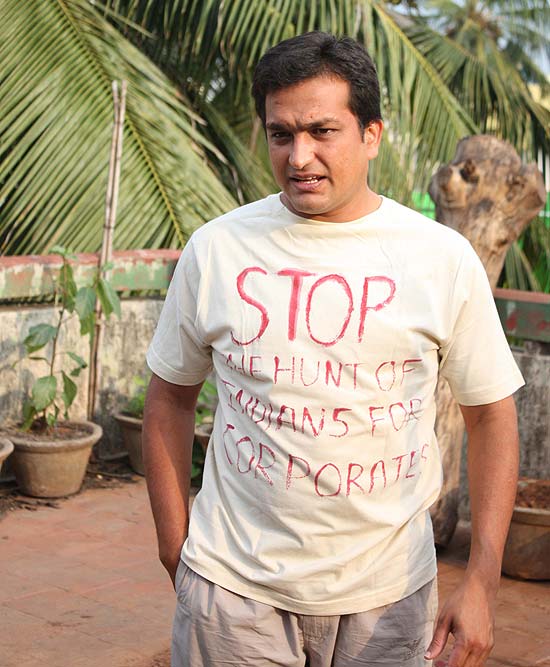
On Republic Day 2010, Sethia went to then Union home minister P. Chidambaram’s home constituency in Tamil Nadu to protest against human rights violations under Operation Green Hunt. “Stop the hunt of Indians for corporates,” read the legend on his T-shirt. But before he could start distributing pamphlets in Tamil Nadu for a cycle yatra, the policemen took a look at the pamphlet, consulted their seniors and whisked him away. Around 12 hours later, he was produced before a magistrate and sent to jail on sedition charges, before the Madras High Court ordered him to be released on bail after 23 days.

Status: Five years on, the chargesheet is yet to be filed in a case in which the police had opposed bail and sought an extended remand.
Nobody knows the exact number of people who stand char­ged under these laws, but anecdotal evidence puts their number in thousands, many of them faceless tribals hauled up for allegedly sheltering Maoists, feeding them or having been seen in the company of rebels, a reality Jairam Ramesh acknowledged when he was Union minister for rural development.

The police get away by saying they had intelligence inputs, secret reports or confessional statements. The judiciary fails to question the police or even grant bail in cases where det­ention serves no purpose other than breaking an individual’s spirit or ruining a family. In case after case, the prosecution fails to prove the charges, leading eventually to acquittals.
“The law is misused rampantly. In Koodankulam, the govt filed 1,000 plus sedition cases. Despite SC directions, they haven’t been withdrawn yet.”Prashant Bhushan, Senior advocate, New Delhi
In the landmark 1962 judgement in Kedar Nath Singh vs State of Bihar, even though the Supreme Court had held the sedition law as constitutionally valid because the speech in question had incited people to violent action and was not just criticism of the government, but had directed that evidence of either violence or an incitement to violence against the state is necessary for detention. As recently as March 18, the Bombay High Court, while deciding a PIL against cartoo­nist Aseem Trivedi’s arrest in 2012, upheld the sedition law, but said guidelines were necessary for arrests.Yet this is routinely disregarded, with  SPs, and deputy SPs and magistrates deciding what amounts to sedition. At a convention of the People’s Union for Civil Liberties in 2012, former Delhi High Court chief justice Rajinder Sachar had quipped that even he could have been booked for sedition for talking to suspected Maoists or terrorists!
But while the United Kingdom repealed the law in 2010 after having tried the last case of sedition way back in 1972, in India the government is unlikely—and possibly unwilling—to repeal such laws. Have they reduced threats to India? The jury is still out. Meanwhile countless individuals are paying a price for something they have not done.


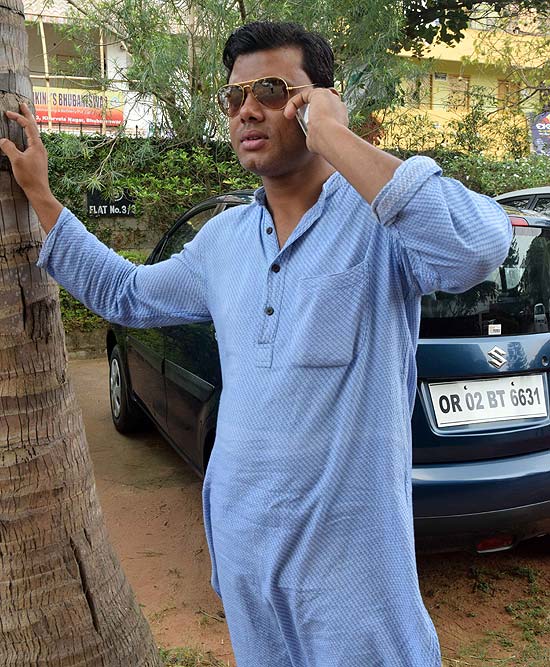
Sangram Mohanty, 34 Businessman and political activist, Brahmapur, Orissa – Photograph by S. Mukherjee
Described as a dreaded Maoist who regularly met Maoist leaders and discussed how to overthrow the government and plan bombings etc, police relied on villagers who had overheard conversations about secret meetings while collecting wood. These alleged meetings would then be linked to incidents like the ‘IEDs found based on secret information’ and implicate Mohanty. Rape and molestation cases were also filed against him .
Status: Mohanty stepped out of jail a day after R-Day this year, having spent three years in jail and granted bail by the Supreme Court, which the high court had denied. This despite villagers denying giving statements to the police implicating him and after the alleged rape victim refused medical examination. But while the Orissa police had filed an affidavit before the apex court declaring there were no more cases against him, Mohanty was arrested outside the jail and booked in two more cases. The SC, in a rare gesture, intervened again and granted him bail a second time.
***
In the national award-winning film Court, you could be forgi­ven for thinking that the central character—the ageing activist Narayan Tamble, charged with inciting war and hatred against the nation—is a figment of a very vivid imagination. But Tamble could well be Sudhir Dhawale, the Dalit rights cultural activist arrested at a seminar on atrocities on Dalits; San­gram and Dandapani Mohanty, arrested and rearrested despite Supreme Court bail orders; Piyush Sethia, who wore his opposition on his tee. Or G.N. Saibaba, whose plight Arundhati Roy has evocatively outlined in the preceding pages.
“Recently the Supreme Court said that there should be guidelines for arrests under sedition laws. But the law itself should be deleted.”Vrinda Grover, Senior advocate, New Delhi
The case against Dhawale was built on the alleged confession of another activist (see box). He was expecting it, says Dhawale, he knew his activism was hurting several political parties. He was also campaigning against a village-level dispute resolution scheme called the Mahatma Gandhi Tanta Mukti Abhiyan. It was being run by upper-caste Hindus, he claims, and it was them he antagonised and paid for with three years in jail. And while the court did not find any evidence to hold him guilty, police officers who built up the case against him got away without so much as a showcause!Dhawale does not deny his faith in the Marxist-Leninist-Maoist ideology. He had worked as a cultural activist with Vidyarthi Pragati Sangathana and Ahwan Natya Manch from 1985 to 1994, organisations the police views as fronts for the erstwhile CPI-ml. When these organisations disappeared from Nagpur, Dhawale took to mainstream activism and continued to work on caste-based atrocities and Dalit rights.

The Maharasthra police claimed to have arrested Dhawale with ‘Naxal literature’ despite the apex court verdict in the Binayak Sen case saying carrying Maoist literature didn’t mean the person practised the principles. The sedition charge ensured he was denied bail. “I was able to secure an acquittal with the help and support of many people,” he told Outlook. “But I’ve seen several inm­ates, especially tribals, in jail on similar charges. They are too poor to fight the state’s might.” Dhawale’s lawyer Surendra Gad­ling—who’s now representing Dr Saibaba—cites the example of a tribal woman who was recently granted bail but whose family was so poor they could not come to get her, and she could not afford to go back.
***
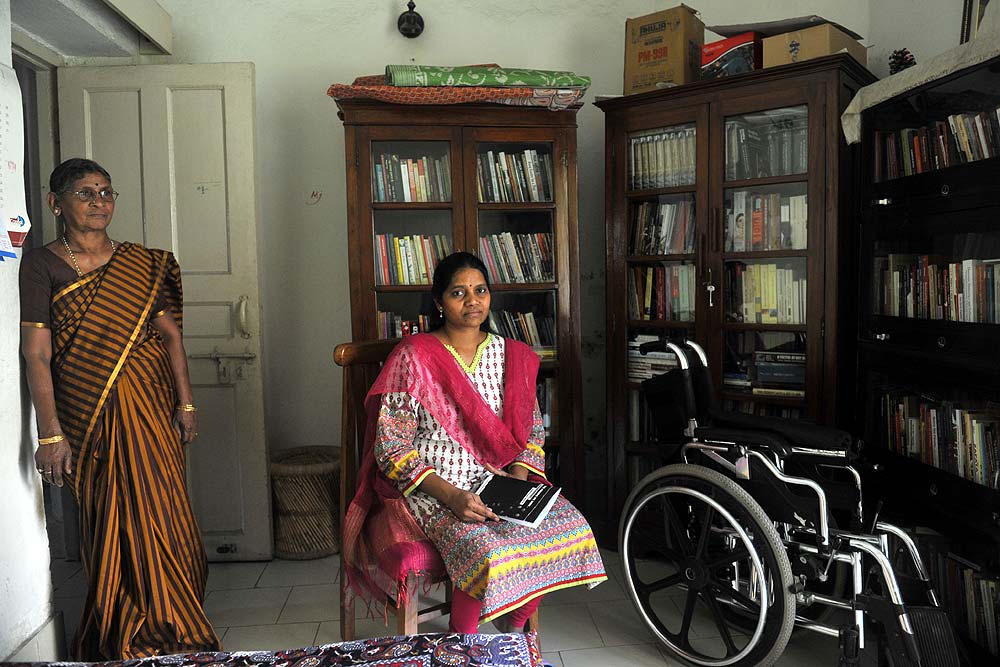
Inside the warden’s residence at Gwyer Hall in Delhi Univer­sity’s sprawling and leafy north campus, Vasantha, Dr Saibaba’s wife, shuttles between the kitchen brewing tea and showing documents from a growing pile and checking on her daughter in the next room. In the yard outside, a scooter, with extra wheels to ensure balance for the physically disabled, gathers dust. Books on Marx, Lenin, Stalin, Mao, other Left thinkers and academics line the bookshelves in the drawing room.

“I have not seen sedition charges stick in my 22 years of trial court experience. In 99 per cent cases, the police also know it too well.”Surendra Gadling, Advocate, Nagpur
The university administration has ordered their eviction. Dr Saibaba’s family would have been homeless had it not been for a temporary injunction from the court staying the order.A government communique classified ‘secret’ suggests Dr Saibaba had been recruiting academicians, doctors and others to become part of Maoist frontal organisations to raise funds and procure weapons for an armed revolution.
The police claim to have found frequent communication between one Prakash and Maoist leaders. Saibaba, they say in the chargesheet, was Prakash. None of the letters is handwritten or signed nor did any neutral witness attest that the police found them at Dr Saibaba’s residence during the raid.
 
The only ‘genuine’ letter the police produced, says Vasan­tha, is one in which her husband and several other intellectuals had appealed to Maoist leader ‘Azad’ to engage in peace talks with then Union home minister P. Chidambaram. (The negotiations never took place because Azad was shot dead en route to the peace talks). Today, the family faces an uncertain future. Vasantha inquires how she can raise funds. She is now part of a group called Women in Conflict, because the government has brought the conflict out of the heavy-forested areas of Central India to their home in DU.
***


Sudhir Dhawale, 46, Activist against atrocities on Dalits, Byculla, Mumbai – Photograph by Amit Haralkar
In 2011, Dhawale was attending a rally against atrocities on Dalits when the police picked him up. Booked under UAPA, police told the court that Dhawale was a ‘card-carrying Maoist’. Other arrested activists had made incriminating statements against him, Maoist literature was found on him at the time of arrest, the police claimed. They opposed his pleas for bail, and the courts denied it.
Status: Activists denied before the court that they had ever ‘confessed’ or identified Dhawale as a Maoist. Prosecution failed to prove that Dhawale was a member of the banned organisation, participated in any terrorist activities and the Maoist literature was found to be available online. Acquitted after three years in jail.

Barely five days after he had joined the Odisha Jana Morcha (OJM), the party floated by chief minister Naveen Patnaik’s advisor-turned-rival Pyarimohan Mohapatra, plainclothes policemen whisked away Sangram Keshari Mohanty, an engineer-cum-lawyer-turned-businessman on December 5, 2012. A vehicle without a number plate had sidled up to his motorbike while he was on his way to a garage to get a truck repaired. His family learned of his arrest after local TV channels beamed the police claiming to have nabbed “a Maoist courier and supplier” with “dry fruits, dry fish and Naxal literature” on him. His father, Dandapani Mohanty, an ex-revolutionary, had been the interlocutor between the state government and the Maoists following the abduction of IAS officer Vineel Krishna, bjd legislator Jhina Hikaka and two Italian tourists. “My son has never been part of any radical left movement,” he had told this correspondent then, sitting at home, the wall in front showcasing Lenin, Marx, other left-wing thinkers and Bhagat Singh. The senior Mohanty was arrested two months later when he went on a hunger strike for his son’s cause.
***
In 2008, the Gujarat edition of the Times of India was sued twice for sedition. Sociologist Ashis Nandy was charged first for a column on the post-Godhra turmoil in Gujarat. Later, a reporter from the newspaper was charged for questioning the appointment of O.P. Mathur as the police chief of the state capital, highlighting his links with the underworld. Another story allegedly sugges­ted how the post was a reward by the Gujarat government for Mathur botching up the probe as investigator into Sohrabuddin Sheikh’s fake encounter.

It was left to the Gujarat High Court to hold that the articles were not seditious, based on an earlier apex court ruling that an individual public servant (in this case the police chief) could not be confused with the state. Calling the charge absurd, the judge said, “…then every argument/comment against the manner and functioning of the government might be alleged to lead to the hatred of the government, and it might be suggested that such comments brought the government into hatred or contempt.” And you still say we need an 1860 law in 2015?

SOURCE:
https://revolutionaryfrontlines.wordpress.com/2015/05/09/independent-india-uses-british-empires-sedition-laws-to-suppress-dissent/#more-29032
 

The Ukraine bans the name Great Patriotic War but Donetsk Celebrates it : Which side are you on ?


The Ukrainian parliament passed a series of laws on April 9, which banned Soviet  symbols throughout the country and officially replaced the “Great Patriotic War”—the Soviet name for World War II, which is still used in Russia—with the “Second World War.”


The law also banned the playing of the Soviet national anthem, the display of the hammer and sickle flag, and mandated the renaming of streets named after Soviet leaders such as Vladimir Lenin.


This video was the 2014 victory Parade in Donetsk


India : Today we remember one year since Prof G.N.Saibaba was arrested by Harsh Thakor


                                  This article expresses the personal views of Harsh Thakor
The event has more significance to the Marxist Leninist revolutionary camp than any event as it was major attack on democratic rights.

A revolutionary democrat like professor Saibaba was arrested on grounds of being associated with the C.P.I. (Maoist).

In fact in the past the state has in several instances arrested democrats or assasinated them through the police force or political mafia in the pretext of curbing terrorism or 'maoism'.

What is significant is that although India cannot be termed fascist in the classical sense and posesses's features of bourgeois democracy it cannot be called a bourgeois or liberal state either.

True it allows freedom of expression in terms of publication of literature ,holding seminars ,press meetings,posters etc.It also allows Maoist publications or revolutionary democratic papers to be published or blogs to be posted.

However the government has also come down heavily on democratic movements as well as intellectuals.

Recently it attacked a meeting supporting the movement for self-determination in Kashmir.

Although not banned,unofficially the Revolutionary democratic front is banned being supressed all over the country.

Just because certain liberties exist which eluded people in fascist countries like Germany in the 1930's does not mean that we should take any form of liberalism for granted.

About 15 years ago the equivalent of Revolutionary democratic Front-the All India Peoples Resistance Forum could function more openly and none of it's office-bearers were attacked.

In recent months the R.D.F vice-president has been killed and it's joint secretary incarcerated.What is lacking is a strong democratic rights movement or organization that is not a front of an Marxist -Leninst group.

The formation of Democratic Front against Operation Green Hunt,Punjab is of special significance. and is playing the best role by any democratic forum in resisting the state repression.

It just heId 2 conventions in solidarity with Professor Saibaba. asked Varavara Rao and the Naveen Babu memorial lecture why the topic was called 'The ascendancy of fascism' and he explained that a liberal state would not be so repressive on peoples movements like in Assam .

He even sighted the example of the Forum of peoples meeting which was prohibited last September in Hyderbad.


However he did state that if we were classically fascist a public meeting would not be allowed.

We have to recognize that certain civil liberties still exist but be aware of fascist attacks looming with the resurgence of Hindu communal fascism.

Today even in Punjab mass meetings of peasant organizations are held principally because of mass support of people and not because of civil liberties in the constitution.

Unofficial democratic protests are even supressed in Punjab.Peasnt organization leaders feel that unofficialy there is no real democracy.

The attack on activists of the Kabir Kala Manch is another classical example with the state trying to extinguish the movement of Dalits.

I recall the days of emergency when organization for protection of democratic rights played a major role .

It asserted that the democratic rights platform should not be mixed with the party platform when a trend existed when the civil liberties platform was used for propogating Marxist-Leninist ideology.

The formation of the All India Federation of Organization for Democratic Rights in 1982 has significance in this regard.In the 1980's and 1990's so many civil liberties activists like Ramandham,Prabhakar Reddy ,Jappa Laxma Rao,T.Purushottam ,Gopi Rajanna were executed in the name of being naxalites.

Even forums like Rahul foundation or Bigul Mazdoor Dasta feel that the bourgeois state is slowly turning into a fascist one with the tentacles of Hindu communal fascism making it stronger.

Remembering a year after Saibaba's arrest democratic activists should be even more determined to challenge the state repression.

Very happy to see such an assembly as in Hyderabad today in the dharna demanding Saibaba's release.

Long Live the Peoples Movement against the arrest of Professor Saibaba! support the  vindication of democrats!


Professor Arch Getty Professor of Russian and Soviet history at UCLA on Victory in Europe Day


Ukraine as a new nation has to create a useable past, Arch Getty, Professor of Russian and Soviet history at UCLA told RT’s In the Now show. War criminals like Bandera, who killed a lot of civilians, are being praised by Kiev government now, he added.

RT: Mikhail Gorbachev said that snubbing the Victory parade is disrespect for the people who suffered enormous losses fighting Nazism. It's clearly not completely perceived this way in the United States. Why is that?

Arch Getty: ... For Americans it was something that they read about in the newspapers or something they heard about on the radio. For the Soviet people it was in their neighborhood, it was in their face- their houses were burnt, their houses were bombed, their neighbors were slaughtered, their family was killed. It had immediacy in their lives. But I don’t think Americans can really understand very well, because for us, in the US, it was something that happened somewhere else, but not for the Soviet people.

RT: If Obama came to Moscow, would this be perceived as weakness amid the current global geopolitical climate in the world?

AG: I don’t think it would be by anybody who fought in the war, or anyone who remembered the war, because it was a joint allied effort. I don’t think it would be perceived as a weakness by anybody who knew anything about the war. In fact, you could even see it the opposite. Having had his sanctions fail to resort to this kind of blockade it seems patty; it seems juvenile, especially given the depth of the loss that the Soviet people felt. You can almost argue that he looks even weaker by not going.

RT: What's the attitude towards this victory in the West now? Is it some kind of inconvenient fact when a lot of what we’re seeing now is to paint Russia as an aggressor, to sort of commemorate what should be a joint victory?

AG: I think it is an inconvenient fact. But for a lot of Americans it is even not a fact at all because they were taught in their schools frequently, that we, Americans, won the war. The Soviet effort has always been minimized here, and that’s happened even more lately. By the time we came ashore on D-Day in June, 1944, the tide had turned on the Eastern Front against the Germans for a year and a half. The Soviets faced 10 times as many German divisions, as we did in the West. That is not a fact for a lot of Americans because they are still living in ignorance of who did what, who turned the tide and what the scale of the thing was. And the more governments on all sides try to rewrite history for their own current purposes the worse that gets.

RT: Shouldn't this victory be bringing Ukraine and Russia together?

AG: It certainly should, but it is not, and it won’t because Ukraine as a new nation, a new state more than anybody else has to create a useable past, a useable history. And they have done so in the most glaring kinds of ways that the Ukrainian Prime Minister, [Arseny] Yatsenyuk has said that WWII was about the Soviet Union invading Germany. War criminals in Ukraine, Bandera, people who killed Jews and many others are being touted as national heroes there for current political needs of the Ukrainian leadership. I’m afraid these celebrations are not going to do that simply because of the attitudes that are being taken.

Source: http://rt.com/op-edge/256849-ww2-war-soviet-union-victory/

SEE ALSO:

http://democracyandclasstruggle.blogspot.co.uk/2015/05/stalins-victory-speech-on-may-9th-1945.html

India: Professor, P.O.W by Arundhati Roy


                  Picture of an armed terrorist? Dr Saibaba outside his house 


So afraid is the government of this paralysed wheelchair-bound academic that the Maharashtra police had to abduct him for arrest

Arundhati Roy, Outlook India Magazine, week of May 18, 2015

May 9, 2015, marks one year since Dr G.N. Saibaba, lecturer of English at Ramlal Anand College, Delhi University, was abducted by unknown men on his way home from work. When her husband went missing and his cellphone did not respond, Vasantha, Dr Saibaba’s wife, filed a missing person’s complaint in the local police station. Subsequently the unknown men identified themselves as the Maharashtra Police and described the abduction as an arrest.

Why did they abduct him in this way when they could easily have arrested him formally, this professor who happens to be wheelchair-bound and paralysed from his waist downwards since he was five years old?

There were two reasons: First, because they knew from their previous visits to his house that if they picked him up from his home on the Delhi University campus they would have to deal with a crowd of angry people—professors, activists and students who loved and admired Professor Saibaba not just because he was a dedicated teacher but also because of his fearless political worldview.

Second, because abducting him made it look as though they, armed only with their wit and daring, had tracked down and captured a dangerous terrorist. The truth is more prosaic.

Many of us had known for a long time that Professor Saibaba was likely to be arrested.

It had been the subject of open discussion for months. Never in all those months, right up to the day of his abduction, did it ever occur to him or to anybody else that he should do anything else but face up to it fair and square. In fact, during that period, he put in extra hours and finished his PhD on the Politics of the Discipline of Indian English Writing. Why did we think he would be arrested? What was his  crime?

In September 2009, the then home minister P. Chidambaram announced a war called Operation Green Hunt in what is known as India’s Red Corridor. It was advertised as a clean-up operation by paramilitary forces against Maoist ‘terrorists’ in the jungles of Central India. In reality it was the official name for what had so far been a scorched-earth battle being waged by state-sponsored vigilante militias (the Salwa Judum in Bastar and unnamed militias in other states). The mandate was to clear the forests of its troublesome residents so that mining and infrastructure-building corporations could move ahead with their stalled projects.

The fact that signing over Adivasi homelands to private corporations is illegal and unconstitutional did not bother the UPA government of the time. (The present government’s new Land Acquisition Act proposes to exalt that lawlessness into law.) Thousands of paramilitary troops accompanied by vigilante militias invaded the forests, burning villages, murdering villagers and raping women. Tens of thousands of Adivasis were forced to flee from their homes and hide in the jungle for months under the open sky. The backlash against this brutality was that hundreds of local people signed up to join the People’s Liberation Guerrilla Army (PLGA) raised by the CPI (Maoist) who former Prime Minister Manmohan Singh famously described as India’s "single-largest internal security threat". Even now, the whole region remains convulsed by what can only be called a civil war.

As is the case with any protracted war, the situation has become far from simple. While some in the resistance continue to fight the good fight, others have become opportunists, extortionists and ordinary criminals. It is not always easy to tell one group from another, and that makes it easy to tar them all with the same brush. Horrible atrocities have taken place. One set of atrocities is called Terrorism and the other, Progress.

In 2010 and 2011, when Operation Green Hunt was at its most brutal, a campaign against it began to gather speed. Public meetings and rallies took place in several cities. As word of what was happening in the forest spread, the international media began to pay attention. One of the main mobilisers of this public and entirely un-secret campaign against Operation Green Hunt was Dr Saibaba. The campaign was, at least temporarily, successful. The government was shamed into pretending that there was no such thing as Operation Green Hunt, that it was merely a media creation. (Of course, the assault on the Adivasi homelands continues, largely unreported, because now it is an Operation Without a Name. This week, on May 5, 2015, Chhavindra Karma, son of Salwa Judum founder Mahendra Karma, who was killed in a Maoist ambush, ann­ounced the inauguration of Salwa Judum-II. This despite the Supreme Court judgement declaring Salwa Judum-I illegal and unconstitutional and ordering that it be disbanded.)

In Operation No-Name, anybody who criticises or impedes the implementation of state policy is called a Maoist. Thousands of Dalits and Adivasis, thus labelled, are in jail absurdly charged with crimes like sedition and waging war against the state under the Unlawful Activi­ties Prevention Act (UAPA)—a law which would make any intelligent human being bust a gut laughing if only the uses to which it is being put were not so tragic. While villagers languish for years in prison, with no legal help and no hope of justice, often not even sure what crime they have been accused of, the state has turned its attention to what it calls ‘OGWs’—Overground Workers—in the cities.


Determined not to allow a repeat of the situation it found itself in earlier, the Union ministry of home affairs spelled out its intentions clearly in its 2013 affidavit filed in the Supreme Court. It said: “The ideologues and supporters of the CPI (Maoist) in cities and towns have undertaken a concerted and systematic propaganda against the state to project it in a poor light…it is these ideologues who have kept the Maoist movement alive and are in many ways more dangerous than the cadres of the People’s Liberation Guerrilla Army.”

Enter Dr Saibaba.

We knew he was a marked man when several clearly planted, hyperbolic stories about him began to appear in the papers. (When they don’t have real evidence, their next best option—tried and tested—is to create a climate of suspicion around their quarry.)

Dr Saibaba was one of the main mobilisers of the campaign against Op Green Hunt. The govt was shamed into denying there was any such operation. Now it’s an Op Without a Name. 
On September 12, 2013, his home was raided by 50 policemen armed with a search warrant for stolen property from a magistrate in Aheri, a small town in Maharashtra. They did not find any stolen property. Instead they took away (stole?) his property. His personal laptop, hard disks and pen drives. Two weeks later, Suhas Bawache, the investigating officer for the case, rang Dr Saibaba and asked him for the passwords to access the hard disks. He gave it to them. On January 9, 2014, a team of policemen interrogated him at his home for several hours. And on May 9, they abducted him. That same night they flew him to Nagpur and from there drove him to Aheri and then back to Nagpur with hundreds of policemen escor­ting the convoy of jeeps and mine-proof vehicles. 
He was incarcerated in the Nagpur central jail in its notorious ‘Anda Cell’, adding his name to the three hundred thousand undertrials who crowd our country’s prisons. In the midst of all the high theatre, his wheelchair was damaged. Dr Saibaba is what is known as “90 per cent disabled”. In order to prevent his physical condition from further deteriorating, he needs constant care, physiotherapy and medication. Despite this, he was thrown into a bare cell (where he still remains) with nobody to assist him even to use the bathroom. He had to crawl around on all fours. None of this would fall under the definition of torture. Of course not. The great advantage the state has over this particular prisoner is that he is not equal among prisoners. He can be cruelly tortured, perhaps even killed, without anybody having to so much as lay a finger on him.

The next morning’s papers in Nagpur had front-page pictures of the heavily armed team of Maharashtra Police proudly posing with their trophy—the dreaded terrorist, Professor pow, in his damaged wheelchair.He has been charged under the UAPA, Sections 13 (taking part in /advocating/abetting/inciting the commission of unlawful activity),  Section 18 (conspiring/attempting to commit a terrorist act), Section 20 (being a member of a terrorist gang or organisation), Section 38 (associating with a terrorist organisation with intention to further its activities) and Section 39 (inviting support and addressing meetings for the purpose of encouraging support for a terrorist organisation.)

He has been accused of giving a computer chip to Hem Mishra, a JNU student, to deliver to Comrade Narmada of the CPI (Maoist). Hem Mishra was arrested at the Ballarshah railway station in August 2013 and is in Nagpur jail along with Dr Saibaba. The three others accused with them in this ‘conspiracy’ are out on bail.Another of the serious offences listed in the chargesheet is that Dr Saibaba is the joint secretary of the Revolutionary Democratic Front (RDF), an organisation that is banned in Orissa and Andhra Pradesh where it is suspected to be a Maoist ‘front’ organisation.

It is not banned in Delhi. Or Maharashtra. The president of RDF is the well-known poet Varavara Rao who lives in Hyderabad.

Dr Saibaba’s trial has not begun. When it does, it is likely to take months, if not years.

The question is, can a person with a 90 per cent disability survive in those abysmal prison conditions for so long?

In the year he’s been in prison, his physical condition has deteriorated alarmingly. He is in constant, excruciating pain. (The jail authorities have helpfully described this as “quite normal” for polio victims.) His spinal cord has degenerated. It has buckled and is pushing up against his lungs. His left arm has stopped functioning. The cardiologist at the local hospital where the jail authorities took him for a test has asked that he be given an angioplasty urgently. If he does undergo an angioplasty, given his condition and the conditions in prison, the prognosis is dire. If he does not, and remains incarcerated, it is dire too. Time and again the jail authorities have disallowed him medication that is vital not just to his well-being, but to his survival. When they do allow the medicines, they disallow the special diet that is meant to go with it.

Despite the fact that India is party to international covenants on disability rights, and Indian law expressly forbids the incarceration of a person who is disabled as an undertrial for a prolonged period, Dr Saibaba has been denied bail twice by the sessions court. On the second occasion, bail was denied based on the jail authorities demonstrating to the court that they were giving him the specific, special care a person in his condition required. (They did allow his family to replace his wheelchair.) Dr Saibaba, in a letter from prison, said that the day the order denying him bail came, the special care was withdrawn. Driven to despair, he went on a hunger strike. Within a few days, he was taken to hospital unconscious.

For the sake of argument, let’s leave the decision about whether Dr Saibaba is guilty or innocent of the charges levelled against him to the courts. And let’s, for just a moment, turn our attention solely to the question of bail, because for him that is quite literally a question of life and death.

No matter what the charges against him are, should Professor Saibaba get bail? Here’s a list of a few well-known public figures and government servants who have been given bail.

On April 23, 2015, Babu Bajrangi, convicted and sentenced to life imprisonment for his role in the 2002 Naroda Patiya massacre in which 97 people were murdered in broad daylight, was released on bail by the Gujarat High Court for an “urgent eye operation”. This is Babu Bajrangi in his own words speaking about the crime he committed: “We didn’t spare a single Muslim shop, we set everything on fire, we set them on fire and killed them—hacked, burnt, set on fire…. We believe in setting them on fire because these bastards don’t want to be cremated. They’re afraid of it.”—‘After killing them, I felt like Maharana Pratap’ in Tehelka, September 1, 2007


Eye operation, huh? Well maybe on second thoughts it really is urgent that he replace the murderous lenses he seems to view the world through with something less stupid and less dangerous.

On July 30, 2014, Maya Kodnani, a former minister of the Modi government in Gujarat, convicted and serving a 28-year sentence for being the ‘kingpin’ of that same Naroda Patiya massacre, was granted bail by the Gujarat High Court. Kodnani is a medical doctor and says she suffers from intestinal tuberculosis, a heart condition, clinical depression and a spinal problem. Her sentence has been suspended.

They’ve allowed his wheelchair to be replaced but denied Saibaba bail twice. Babu Bajrangi was let off for eye surgery. Maybe he’ll replace the murderous lens he views the world with.

Amit Shah, also a former minister in the Modi government in Gujarat, was arrested in July 2010, accused of ordering the extrajudicial killing of three people—Sohrabuddin Sheikh, his wife Kausar Bi and Tulsiram Prajapati. The CBI produced phone records showing that Shah was in constant touch with the police officials who held the victims in illegal custody before they were murdered, and that the number of phone calls between him and those police officials spiked sharply during those days. Amit Shah was released on bail three months after his arrest. (Subsequently, after a series of disturbing and mysterious events, he has been let off altogether.) He is currently the president of the BJP, and the right hand man of Prime Minister Narendra Modi.

On May 22, 1987, 42 Muslim men rounded up in a truck by the Provincial Armed Constabulary (PAC) were shot dead in cold blood on the outskirts of Hashimpura and their bodies were dumped in a canal. Nineteen members of the PAC were accused in the case. All of them were allowed to continue in service, receiving their promotions and bonuses like everybody else. Thirteen years later, in the year 2000, 16 of them surrendered (three had died). They were released on bail immediately. A few weeks ago, in March 2015, all 16 were acquitted for lack of evidence.

Hany Babu, a teacher in Delhi University and a member of the Committee for the Defence and Release of Saibaba, was recently able to meet Dr Saibaba for a few minutes in hospital. At a press conference on April 23, 2015, that went more or less unreported, Hany Babu described the circumstances of the meeting: Dr Saibaba, on a saline drip, sat up in bed and spoke to him. A security guard stood over him with an AK-47 pointed at his head. It was his duty to make sure the prisoner did not run away on his paralysed legs.

Will Dr Saibaba come out of the Nagpur central jail alive? Do they want him to? There is much to suggest they do not.

This is what we put up with, what we vote for, what we agree to.

This is us.

Thursday, May 7, 2015

Stalin's Victory Speech on May 9th 1945 and Speech on 3rd July 1941 Red Salute to the Chairman of the Defence Council of the USSR Comrade Stalin and the Red Army of the Soviet Union


Democracy and Class Struggle salute the heroic contribution of the Soviet People and their leadership  in the historic defeat of Nazis Germany on this 70th anniversary of victory in Europe..

Today the revisionist historians in the West downplay the importance of the Soviet contribution to the defeat of the Nazis.

In the Ukraine they have called the UPA and other pro Nazis fighters "Patriots" they have done the same in the Baltic States.

The USA and NATO are playing with fire using these new Nazis and Fascists as its frontline storm troopers in Eastern Europe against Russia today and finds it inconvenient to teach the real history of Soviet heroism and sacrifice as their present ideology demands a falsified history of the Second World War.

Ultimately their lies will consume them because the Soviet contribution to the defeat of Nazism is immortal and no amount of falsification of history will change that.

The Nazi defeat in the Second World War is difficult for some Western commentators and even some historians to comprehend and even the US Military have run and re run countless war games which produces a Nazi victory.

It was J V Stalin that inspired his people and was Chief of the Defence Committee of The USSR who selected the right Generals for the job and through persistence and hard work brought his people to victory guided by the ideology of Marxism Leninism.


The Not So Secret British Election Ballot Papers


Democracy and Class Struggle publish this article as many people are not aware of these undemocratic practices of the British State and believe in the formal ritual of British democracy but not its actual practice.

If you ask an Election Officer at a Polling Station whether the number on the Ballot Paper can be traced to your name - he will say it requires a Court Order.

Therefore the British Election Ballot is not Secret one, despite the belief of millions to the contrary

 UNDER the Representation of the People Act 1983 the Returning Officer, usually a senior official of the local council, has to ensure that all ballot papers, counterfoils and the polling clerks’ marked copies of the electoral register are safely deposited with the Clerk of the Crown in Chancery (a senior officer of the Lord Chancellor’s Department).

This is so that if any corrupt or illegal election practices are reported the appropriate documents are available for inspection. All such documents are supposed to be officially sealed so that there is no chance of interference by any party and, according to the 1983 act, the seal can only be broken by the order of the High Court or Parliament itself.

In practice ballot papers are simply bundled-up into paper sacks and transported to a warehouse in Hayes, Middlesex, for the statutory period of one year and one day.

Following the 1987 general election, I reported on the disposal of the 7,000 sacks of this ‘low-grade confidential waste’ for a national newspaper.

The papers were transported by truck from the Hayes warehouse to be incinerated in the North London Waste Authority plant at Enfield. During that process we witnessed dozens of sacks splitting and many hundreds of spent ballot papers spilling for all to see.

This adds weight to the conspiracy theory that security around the election documents is very lax, and that the vote-tracing procedure has been used to identify people voting for fringe candidates.

Votes can be traced by matching the numbered ballot paper to its similarly numbered counterfoil; the numbered counterfoil also bears the voter’s registration number from the electoral register which is hand-written by the Polling Clerk when the ballot paper is issued.

As all the ballot papers for each candidate – including fringe candidates such as Sinn Fein, communists, fascists, nationalists, etc. – are bundled together, anyone having access to those documents can speedily trace the name and address of every voter for such candidates if they wish.

In 1981 Gordon Winter – a former agent of BOSS, the South African Secret Service – writing in his book, Inside Boss, claimed that the South African government knew the identity of everyone who voted for the Communist Party of Great Britain – thanks to British intelligence using this simple vote-tracing procedure.

In any event, the notion that we have a secret vote is very misleading.

One positive outcome of the 1987 general election, however, was that the incineration of 91 tons of ballot papers contributed to the 21 megawatts per hour output of the North London Waste Authority plant, which supplies electricity to Tottenham.

David Northmore, Author of The Freedom Of Information Handbook, London W1.


I DO NOT know what happens to the voting slips for Conservative candidates, after they have been counted, but in the mid-1960s those for communists were tallied against their counterfoils in the ballot books (just like cheque books) and those who had had the temerity to vote for a communist were identified from the electoral roll.
 
Their names were forwarded to Special Branch and to MI5, almost certainly as a matter of routine. The source for this information was a good one. He was a postgraduate student doing his doctoral research on local government in a Midlands steel town where he was attached to the town clerk's department. One day he opened a cupboard, looking for some documents, and found instead a large number of ballot slips, all of which were marked in favour of a communist candidate in the local elections. The town clerk returned and found the student with the slips and told him (knowing the student's safely right-wing views) that it was one of his regular chores to forward the names of communist voters to the Special Branch. As the town had a strong communist tradition it was a recurrent task for the town clerk and the slips had been put to one side until he had time to deal with them. The then student (my informant) saw nothing wrong with this procedure - which made his account the more believable.
Michael Wilson, Thame, Oxon